Cognitive Playroom
Video game for cognitive stimulation of people with Alzheimer's disease.
- Year
- 2024
- Status
- Live
- Role
- Design and engineering
- Stack
- Unity · C# · Next.js
Context
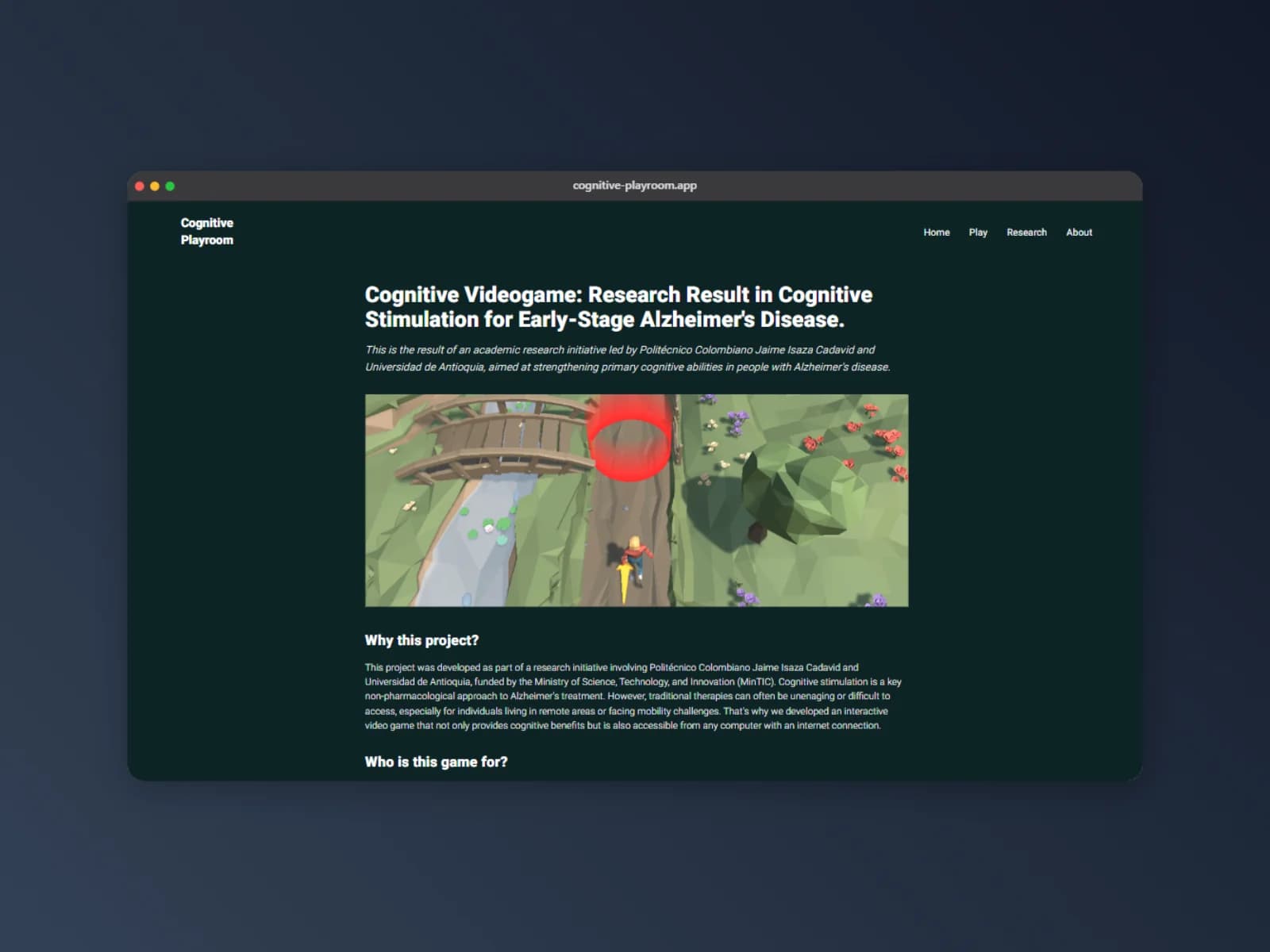
Cognitive Playroom grew out of research on cognitive stimulation for people with early-stage Alzheimer's disease. The challenge was to turn clinical criteria and research findings into a digital experience that felt clear, accessible, and engaging.
The project began with literature review, expert interviews, and co-creation sessions. That process identified four key areas: memory, attention, executive function, and problem-solving.
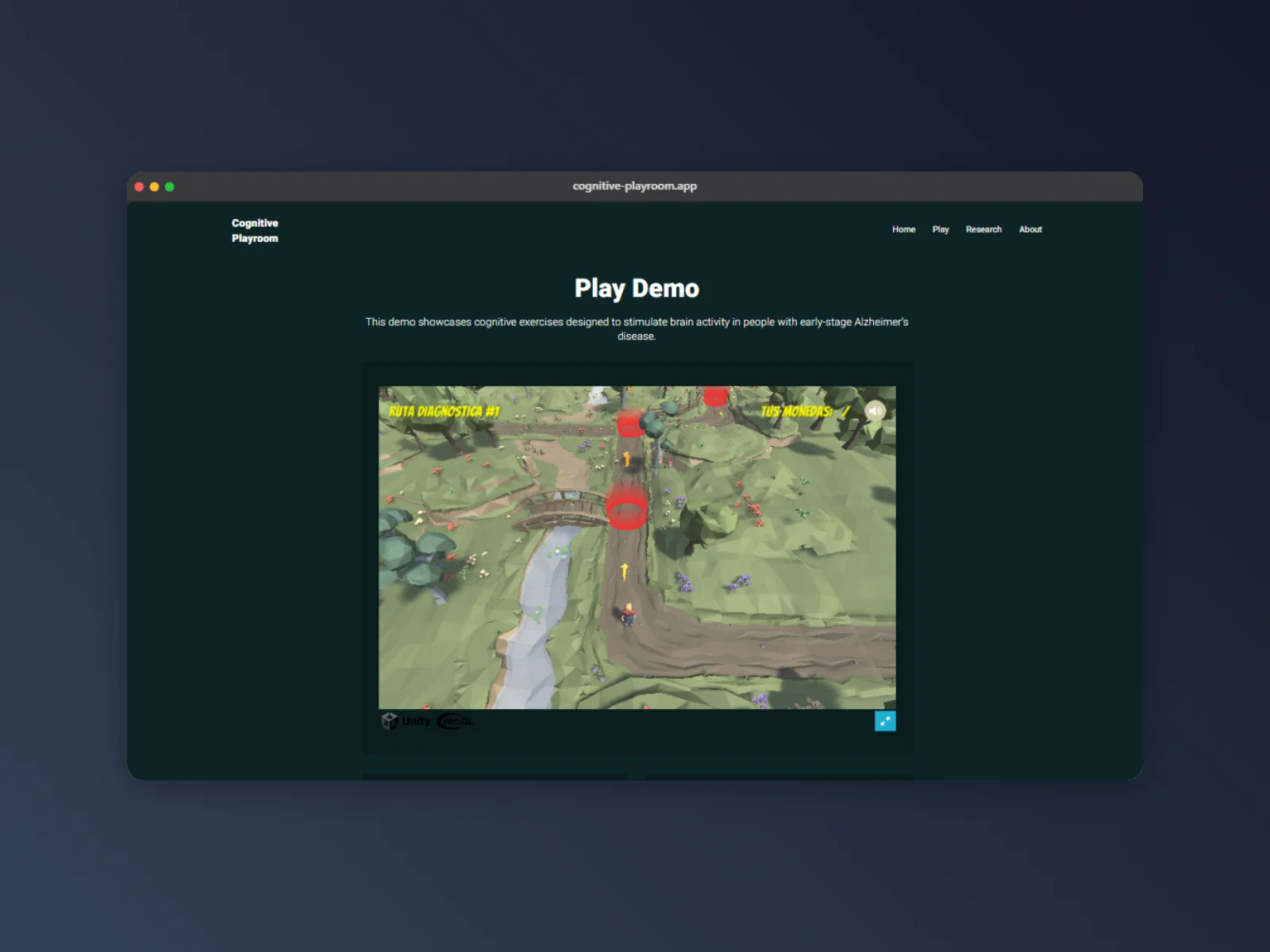
The solution became a 3D serious game connecting multiple exercises within a single experience. Every interaction needed to work as part of the game while also serving a specific research objective.
Decisions
Design for the user
The interface could not become another barrier. Simple controls, clear instructions, restrained environments, and direct feedback helped ensure that the challenge came from the cognitive exercise, not from understanding the software.
Mechanics with purpose
Every activity started from a specific cognitive goal. The result was twelve mini-games built around memory, attention, executive function, and problem-solving, with variables such as time and attempts used to observe performance.
Lower the barrier
The game was built in Unity and delivered through WebGL to avoid installations and reduce technical requirements. A low-poly visual direction kept the 3D experience engaging without demanding specialized hardware.
Outcome
The final prototype combined a 3D environment, twelve cognitive challenges, multiple routes, variable difficulty, scoring, and reward systems. It was then tested with people with early-stage Alzheimer's disease and their caregivers.
Participants described the experience as easy to use and entertaining, even with little previous computer experience. The project also culminated in a scientific publication presented at IHSI 2024.